

🎯Too Long; Didn’t Read
US libraries are the ultimate travel hack: iconic landmarks with usable amenities – air conditioning, restrooms, no entry fee – and zero pressure to stay.
Best libraries in the US include:
- Library of Congress (DC): The 1897 Jefferson Building stuns. While the iconic Main Reading Room is mostly for viewing, free daily tours access the monumental Great Hall and treasures like a Gutenberg Bible.
- New York Public Library (Manhattan): Famous lions guard the 1911 Beaux-Arts exterior. Inside, the Rose Main Reading Room soars. Grab one of the twice-daily free tours; see rotating exhibits of manuscripts and the renovated catalog room.
- Boston Public Library: The first major U.S. municipal library. The 1895 McKim building is Renaissance-style perfection: seek out Bates Hall, the serene courtyard, and famed murals.
- Seattle Central Library: Rem Koolhaas’s 2004 angular glass design. Its “Books Spiral” ramps nonfiction across four continuous floors. Head to the top for views; tours run often.
- Morgan Library & Museum (NYC): J.P. Morgan’s former private collection. Lavish rooms display rare manuscripts, music scores, and letters. Admission is required.
- George Peabody Library (Baltimore): The 1878 interior drops jaws: tiered iron balconies stack beneath a vast skylight. Usually walk-in, but verify—events sometimes close it.
- Beinecke (Yale): A 1963 windowless cube of translucent marble, protecting rare texts. A central glass tower exposes the stacks. Spot a Gutenberg Bible and the mysterious Voynich Manuscript. Viewing areas are free.
- Huntington (San Marino, CA): A massive rare-book collection, plus an art museum and sprawling gardens. Tickets are timed and paid; book ahead.
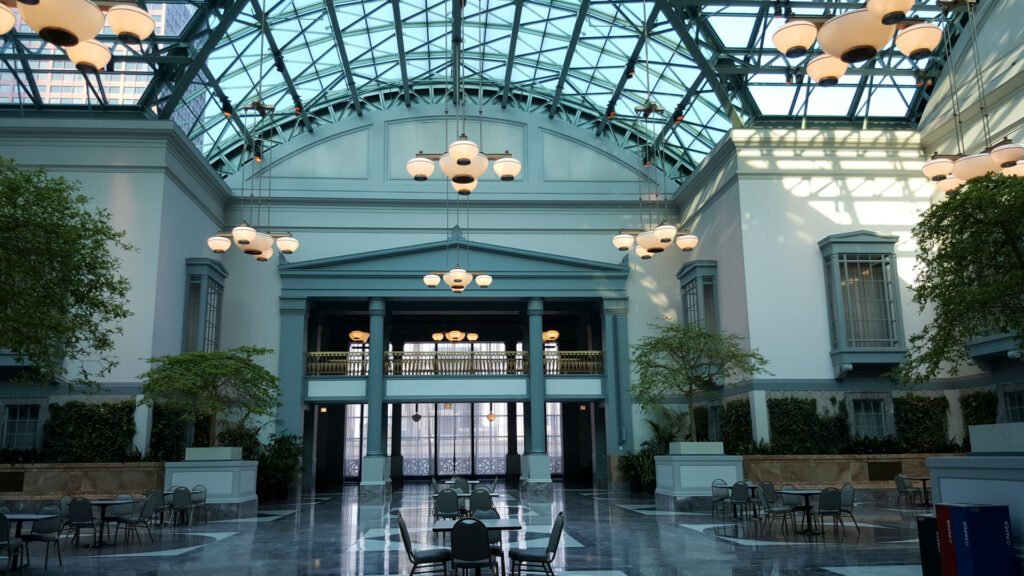
- Harold Washington Library (Chicago): The city’s huge 1991 main branch. Don’t miss the ninth-floor Winter Garden. It’s loaded with public art, special collections, and constant events.
Libraries extend far beyond local book lending. Many of America’s significant architectural accomplishments are, in fact, libraries. These institutions often encourage visits – whether to admire their interiors, investigate specialized holdings, or simply experience the space. Consider this list for your travel route.
Why Visit Libraries
- These structures map America’s architectural and cultural shifts. Compare the late 1800s interiors—their ornate, almost obsessive craftsmanship – against Seattle’s contemporary clarity. Both serve a function. Both achieve beauty. Just differently.
- It’s the collections that anchor you. Centuries-old manuscripts. First printings of world-changers. You confront the physical artifact, a connection screens simply fail to replicate. This is the preservation of human insight itself. Walking these floors traces what generations chose to build and keep.
- Access defines them, too. Forget the $30 museum ticket. Libraries gatecrash that model. They’re public, they’re chilled, and yes, the bathrooms are a summer sightseer’s secret. No gift shop. Just maybe borrow a book on your way out.
Their existence isn’t guaranteed. It’s a community contract. Using them is what keeps them alive.
Best Libraries in the US Tourists Can Visit
Library of Congress, Washington DC
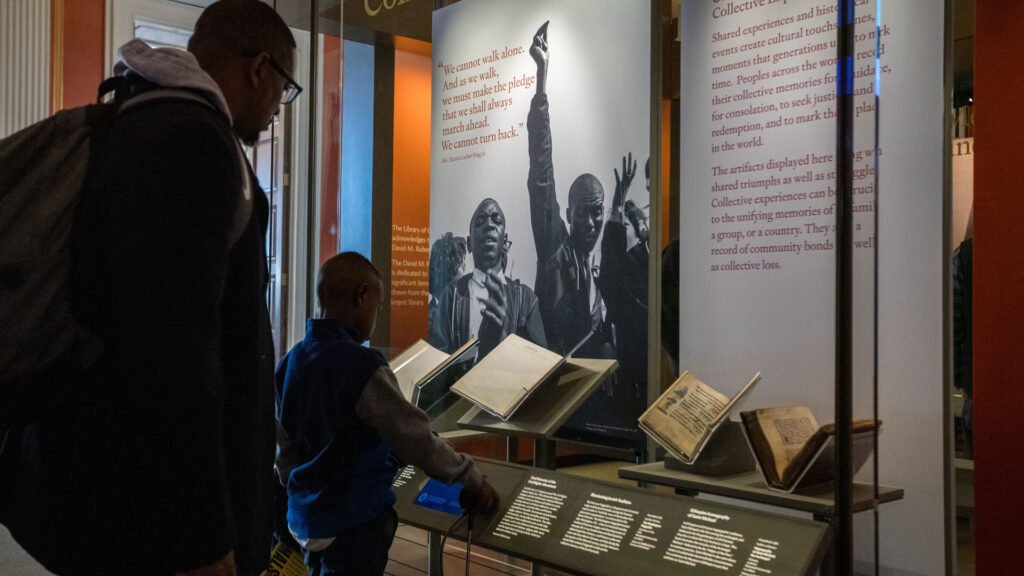
The world’s largest library occupies a space on Capitol Hill. Its three structures contain more than 173 million things – not just books, but manuscripts, maps, photographs, reels of film. The oldest, the Thomas Jefferson Building, opened in 1897 and remains the central showpiece.
Enter the Main Reading Room. The dome soars 160 feet above. Below, circles of mahogany desks. Eight statues stand for distinct branches of knowledge, while murals consume almost every inch of wall and ceiling.
This isn’t a place for casual browsing. Access is restricted. Free tours, however, run daily. They cover the Jefferson Building’s highlights, including rotating exhibitions. Past displays have included Rosa Parks’ personal papers, early speech drafts, and maps from centuries past.
What to see there:
- The Great Hall confronts you immediately: a forest of marble columns, arches, and staircases. Gold leaf blazes across sections of the ceiling. Overhead mosaics frame historical and mythological figures. This is an unapologetic spectacle—the building was designed as a stage for American culture and achievement around 1900.
- A special case holds the Gutenberg Bible. Only three perfect copies exist on this side of the Atlantic; this is one. The library also safeguards an early printing of the Declaration of Independence.
- For music enthusiasts, the instrument collection demands attention. Benny Goodman’s clarinet sits here, alongside pieces from famous composers. The website recommends booking tours in advance, especially during peak season.
New York Public Library, Manhattan
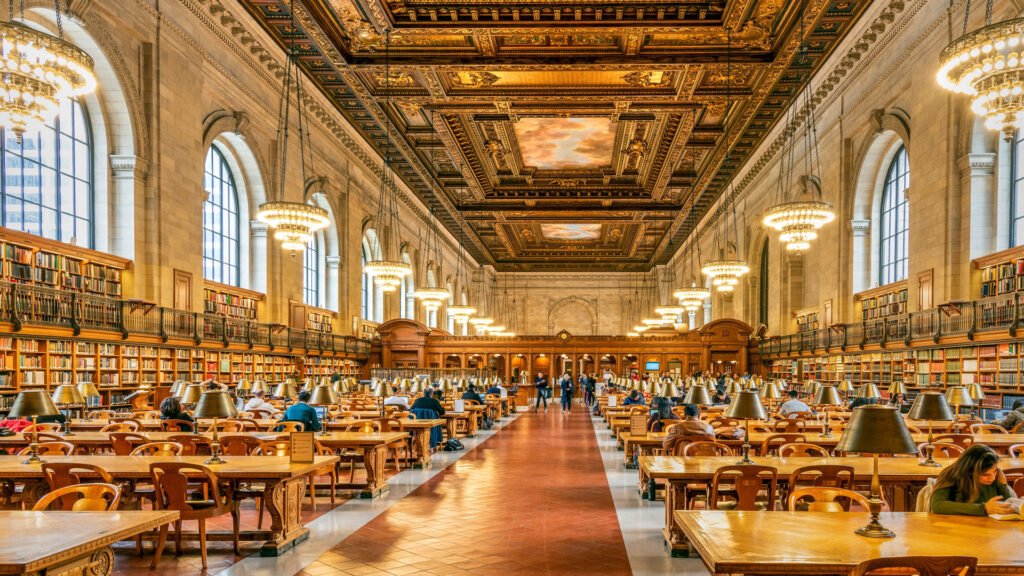
Those two marble lions on Fifth Avenue – Patience and Fortitude – are practically New York landmarks. Guarding the Stephen A. Schwarzman Building, the main branch opened its doors in 1911. Inside, the Rose Main Reading Room runs almost two city blocks long. Ceilings tower fifty-two feet overhead. Brass chandeliers drop their light onto rows of wooden tables.
Across the ceiling, murals of clouds drift. A focused hush fills the space. Students, writers, researchers – all surrounded by walls of books, thousands of them. Only the sound of turning pages.
Free tours and exhibitions:
- Tours run twice daily: 11 AM and 2 PM. No reservation – just grab a spot. A guide will lead you through Astor Hall, all Tennessee marble, then up the grand staircases. Which rooms you see depends on the day – whatever’s open.
- Exhibitions change yearly. Past displays included the original Winnie-the-Pooh toys, Bob Dylan’s scribbled lyrics, even medieval manuscripts. Deeper in, the Berg Collection keeps Virginia Woolf’s desk. The Map Division stocks over 433,000 sheets.
- Recently renovated, the Bill Blass Public Catalog Room now occupies the old card catalog space. It’s a reading room, pure and simple – computers, shelves of actual books you can pull and browse.
Boston Public Library
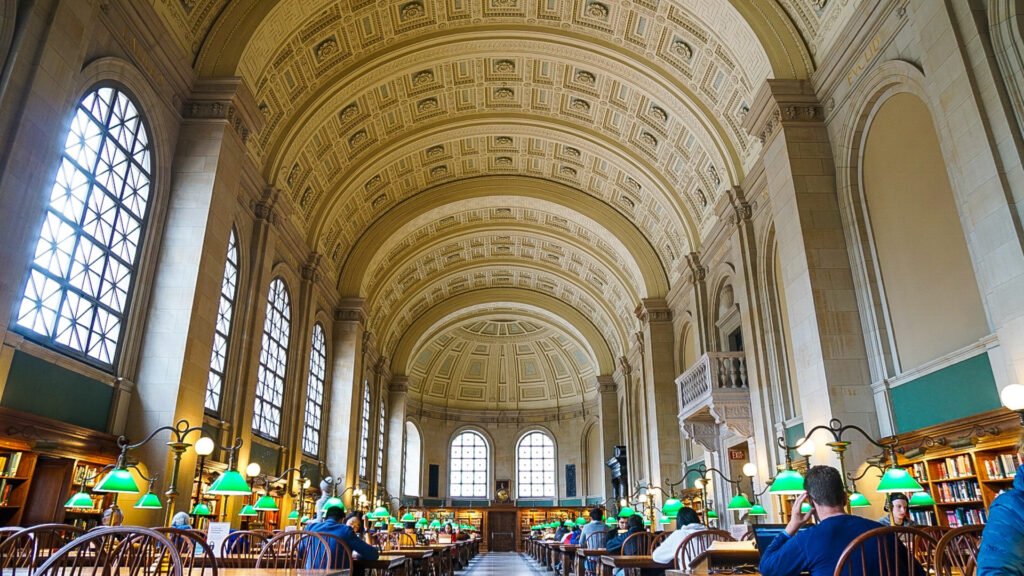
America’s first publicly funded municipal library opened its doors in 1848. Then came the McKim Building at Copley Square in 1895 – Italian Renaissance architecture, yes, but built for modern use. Step inside Bates Hall. The reading room stretches 218 feet, capped by a barrel-arched ceiling that climbs fifty feet overhead. Readers settle at oak tables, green-shaded lamps pooling light on their work. The space carries a quiet, another-century hush.
But the real gem might be the courtyard. Tucked inside the building, it’s a full Renaissance cloister reborn. Open sky, a fountain, arcades, benches. Pure escape from the city din.
Art and Architecture:
John Singer Sargent dedicated years to the third-floor gallery murals. The Triumph of Religion alone consumed nearly thirty. Alongside him, the library commissioned Pierre Puvis de Chavannes and Daniel Chester French
Free tours operate weekly. Guides move through building history, art collections, and the quiet reading rooms. Tucked away, the rare book department safeguards centuries – first editions and manuscripts resting in its care.
Seattle Central Library
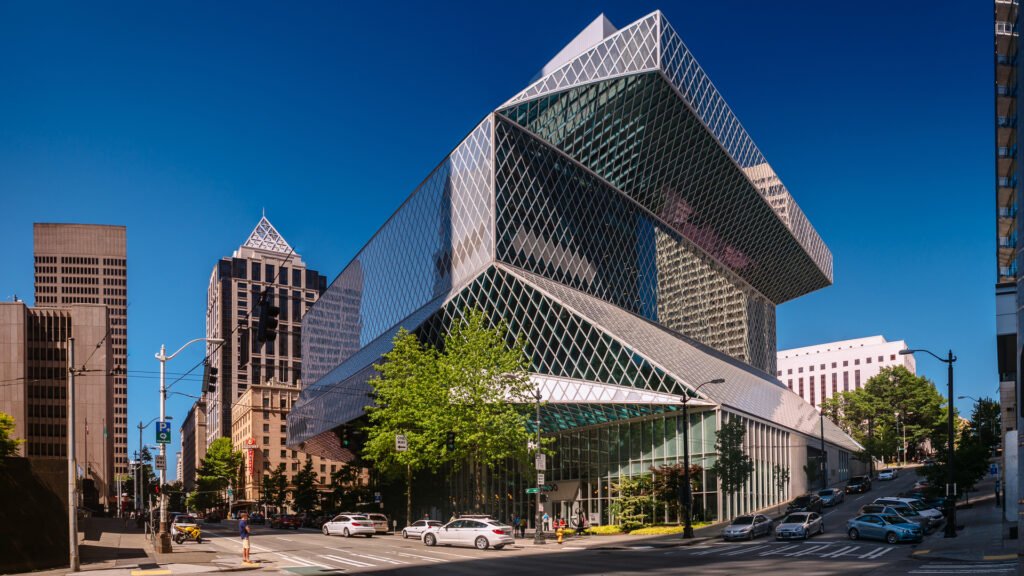
Opened in 2004, this building defies expectation – it looks perpetually off-kilter, like it might just tip over. Dutch architect Rem Koolhaas realized it in a skin of diamond-shaped glass and steel. Inside, the floors cascade; nothing sits level.
At its heart is the “Books Spiral.” Forget separate, divided floors. Here, the non-fiction collection winds in one continuous ribbon across four stories. You follow the path of human knowledge upward, no dead ends, no staircases to break the flow.
On the tenth floor, the reading room is framed entirely by windows. The view claims Elliott Bay and the Olympic Mountains. Through the building’s core, bright red escalators slice through all that concrete and glass, a sharp visual jolt in the serene space.
Modern design philosophy:
Every design choice has a clear job. Diagonal lines slice across the facade to pull in maximum daylight. Navigation is color-coded by floor – red means mixing, yellow is living, green for kids, violet for staff. Meeting rooms float, suspended within the main volume.
Tours run often. Staff break down the unusual structure, detailing the reasoning behind each decision. The library itself houses 1.45 million physical books and materials. Plus, a massive digital collection is available through over 400 public computers on-site.
The Morgan Library & Museum, New York
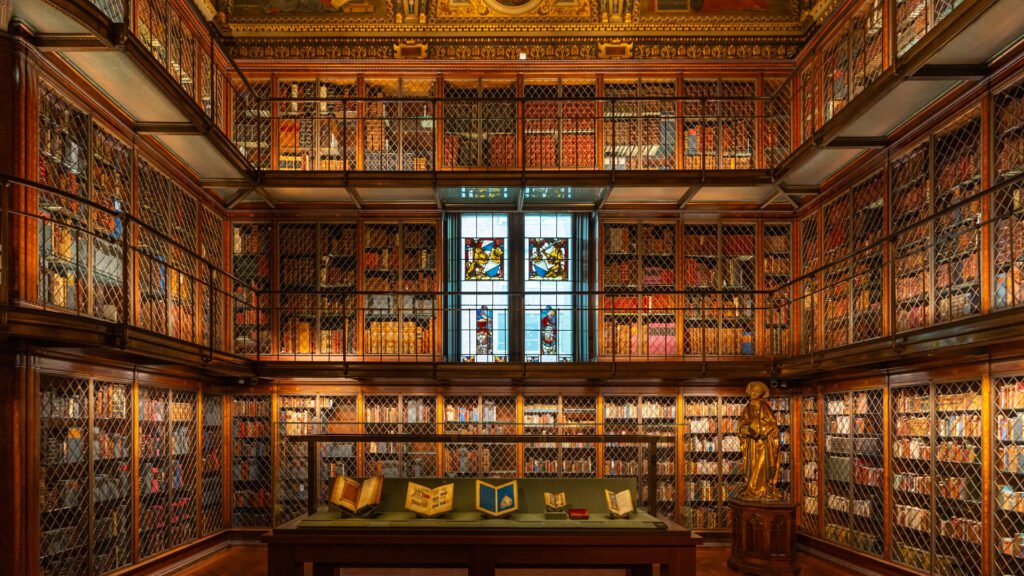
Three tiers of bronze and brass bookcases rise toward a painted ceiling in the librarian’s room, their cool handles and orderly spines housing rare manuscripts and books.
Next door, J.P. Morgan’s own study stays untouched – his desk fixed in place, walls crowded with tapestries and paintings. What began as his private collection in 1906, a trove of art and texts, now operates as a public museum and research center.
Rare collections:
- The collection holds three Gutenberg Bibles. Climate-controlled cases preserve medieval manuscripts, their pages illuminated.
- Mozart, Beethoven, Brahms—their original scores fill the music archive.
- You’ll find letters from Washington, Lincoln, and Dickens. Austen’s handwritten notes are here, alongside the original manuscript of “A Christmas Carol.”
Admission isn’t free; this is a museum. Exhibitions rotate frequently, often featuring works borrowed from other institutions. The building, designed by McKim, Mead & White, stands as an architectural landmark in itself.
George Peabody Library, Baltimore
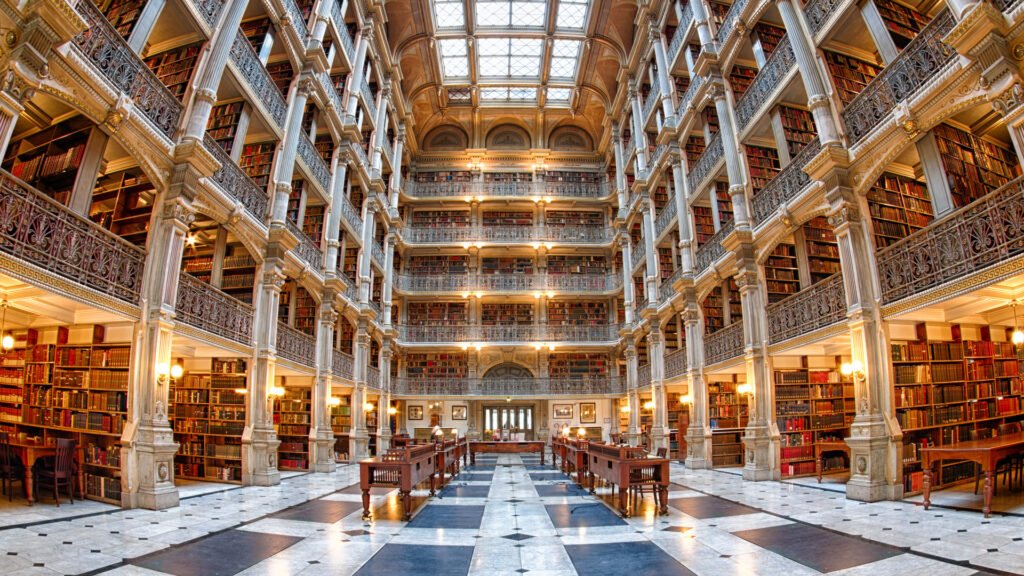
Opened in 1878 as part of Johns Hopkins, the Peabody Library exists because George Peabody bankrolled a free public library for Baltimore. Its interior isn’t just famous – it’s arguably the most photographed library space in the country.
Five tiers of cast-iron balconies soar 61 feet, stacking toward a skylight. Each level is column-supported. Shelves hold more than 300,000 volumes. Underfoot, the black and white marble floor mirrors the entire scene above, a perfect reflection of that jaw-dropping geometry.
Visiting information:
The library mainly functions as a research space, though it remains open to the public. No tour required – just walk in and explore. Keep in mind, weddings and private events frequently reserve the building, so verify the calendar before you make a special trip.
Beinecke Rare Book & Manuscript Library, Yale University
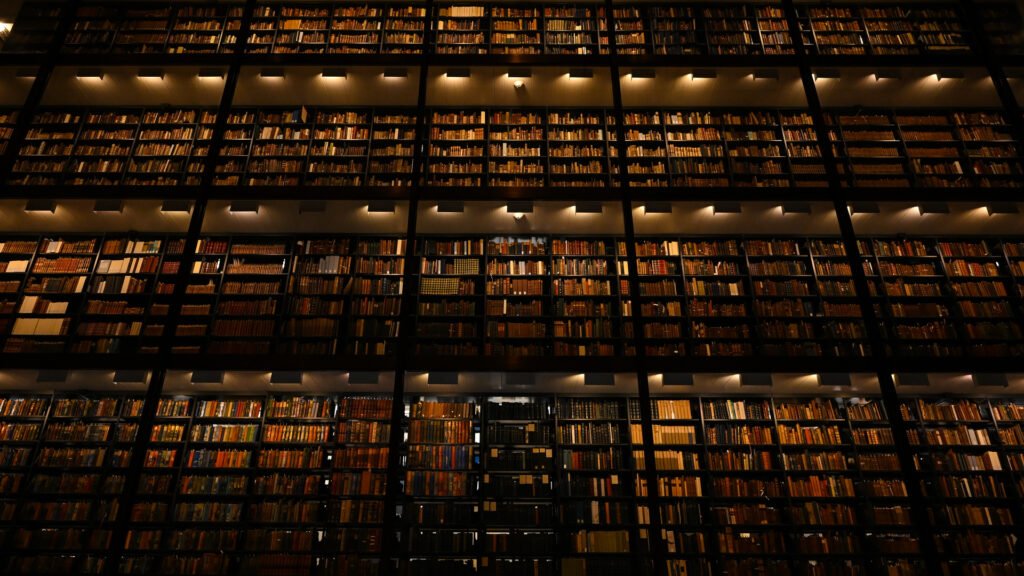
Houses Yale’s rare books and manuscripts. The structure itself, finished construction in 1963, uses walls of translucent marble – no kidding, no windows. Those marble panels diffuse daylight, shielding the fragile collections inside.
Rising through its heart: six floors of glass-enclosed stacks. Over 180,000 volumes sit behind bronze and glass. The effect is a tower that appears to float, centered and suspended within the space.
What’s inside:
The library holds a Gutenberg Bible. Their collection also includes the Voynich Manuscript—an unreadable illustrated codex – alongside original Audubon prints and medieval texts.
While primarily serving students and researchers, the main floor offers free public access during operating hours. Rotating exhibitions occupy the mezzanine. The entire structure stands as a definitive example of mid-century design.
Huntington Library, Art Museum, and Botanical Gardens, San Marino, California
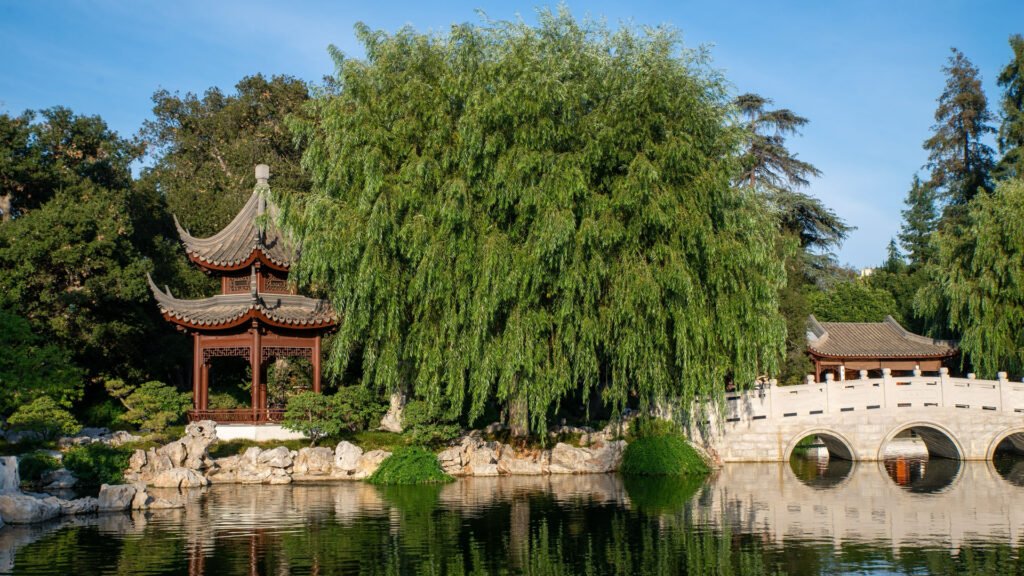
Henry Huntington built his estate in San Marino and stuffed it with rare books, manuscripts, and art. After he died, the place went public. That library now packs in over 11 million items.
Take the Gutenberg Bible – they stashed a copy here as well. An early 1400s Ellesmere manuscript of Chaucer’s Canterbury Tales sits alongside original pages from Thoreau and Mark Twain. The collections are built on these concrete pieces of history.
More than books:
Plan for several hours here. The art galleries focus on British and American works. Outside, the grounds sprawl across 120 acres of botanical gardens, plants sourced globally. Desert garden. Japanese. Rose. Take your pick.
Timed entry tickets, which require a fee, are essential. Book online well in advance, especially spring and summer when crowds flock to the gardens. The library runs rotating exhibitions, drawn from its deep, extensive holdings.
Harold Washington Library Center, Chicago
Chicago’s main library opened in 1991 – a brute of brick and granite commanding an entire city block in the Loop. Ten stories tall, it holds the title of world’s largest public library building by sheer square footage.
Inside, the building reveals something unexpected: the Winter Garden perched on the ninth floor. A glass dome caps the space, flooding it with natural light. Plants and trees thrive here. The room isn’t just greenery; it hosts readings and performances, a public pulse under that glass ceiling.
Public art and collections:
Art fills the building. Not just in galleries – mosaics peek from walls, sculptures command hallways, paintings turn corridors into exhibitions. Up on the Special Collections floor, you’ll find rare books and Chicago’s historical archives. Dig deeper.
Free weekend tours are available. But the place truly buzzes with hundreds of monthly programs: author talks, concerts, film screenings, hands-on workshops. Then there’s the third floor – home to the planet’s largest public collection of blues and jazz recordings.
Planning Your Library Tours
- Access to most major libraries is free, but special exhibitions often cost money. Always verify tour times and booking needs online. Many are closed Sundays or Mondays.
- Ask about photography; policies are all over the place. You might get a green light in the lobby, but reading rooms or special collections areas are often no-go zones. Never assume – a quick check can avoid the glare of a guard.
- Remember, these are working spaces, not just attractions. Reading rooms require quiet. Rare books and manuscripts are hands-off unless staff instruct otherwise. Be prepared to check or store bags in lockers before entering certain sections.
- During peak season, iconic spots like the NYPL or Library of Congress get packed. Aim for weekday mornings for a less crowded experience. Note that university libraries, such as the Beinecke, often operate on reduced hours during academic breaks.
❓FAQ❓
Do I need a library card to enter or look around?
Usually not – most buildings and public areas are open to visitors without a card, though research rooms may require registration or ID.
What should I wear?
Aim for “neat casual”; some historic spaces feel like museums, and a respectful look helps in quiet reading rooms and tours.
Can I bring kids?
Yes – many have children’s areas and family programs, but you’ll want a backup plan if a flagship reading room is too quiet or restrictive.




0 Comments